Villas for Sale in Uluwatu, Bali
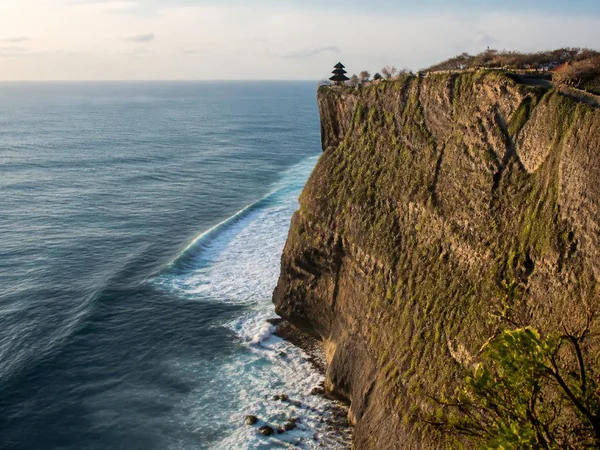
Uluwatu sits at the far southern tip of the Bukit peninsula, on a raised limestone plateau rather than the volcanic soil that defines most of south Bali. That geology is the single fact that shapes almost everything else about buying here: no rivers, no natural topsoil to speak of, cliffs that drop straight into the Indian Ocean, and a water table that has to be reached through deep boreholes into porous karst rock rather than drawn from surface irrigation channels.
The area grew up around surf, not agriculture or nightlife. Padang Padang, Suluban, Bingin's neighbouring breaks and the reef at Uluwatu temple itself put the area on the map decades before villa development followed, and the buyer profile still skews toward people who want to wake up to swell forecasts rather than cafe culture. Development has since broadened into resort-scale hospitality and villa estates, particularly around Pecatu and Ungasan, but the pace and character of that growth still lags Canggu or Seminyak by years, partly because building on a cliff plateau is simply slower and more expensive than building on flat rice-field land.
Buyers should treat Uluwatu as a different due-diligence category from the rest of south Bali, not a cheaper or further-flung version of it. Road access, water security and cliff-edge geotechnical stability are not footnotes here; they are the questions that determine whether a plot is buildable at all, and they vary enormously between properties a few hundred metres apart.
Who Uluwatu suits
- Surfers and lifestyle buyers who prioritise proximity to Padang Padang, Suluban, Bingin and Uluwatu's reef breaks over urban convenience
- Investors targeting the boutique clifftop villa and beach-club rental market rather than high-volume short-let turnover
- Buyers comfortable with a longer drive to Denpasar's airport, hospitals and international schools in exchange for cliff and ocean views unavailable elsewhere on the island
- Hospitality-focused developers and buyers pursuing resort or wellness-retreat concepts that fit the area's tourism-zoned land
- Buyers who are willing to commission independent hydrogeological and structural surveys before purchase, rather than relying on a fast transaction
Lifestyle and infrastructure
- Daily life orbits around surf and swell more than any other south Bali area; shops, warungs and rental schedules noticeably track the wet-season versus dry-season surf calendar
- The nearest supermarkets, larger clinics and the bulk of nightlife and dining variety are a 20-40 minute drive north toward Jimbaran, Nusa Dua or Kuta
- International schools are not local; families typically commute toward Jimbaran, Nusa Dua or further north, which is a genuine daily consideration for anyone relocating with children
- Beach access along much of the coastline means descending steep steps or cliff paths rather than walking onto sand, which affects both lifestyle and property values depending on proximity to a proper access point
- Cliffside beach clubs and resort dining have expanded rapidly and now form a meaningful part of the area's appeal beyond surfing alone
- Mobile signal and utility reliability can be patchier on the more remote clifftop stretches than in built-up Pecatu or along the Melasti corridor
Neighbourhoods and micro-locations
Pecatu
The administrative and commercial centre of the Bukit's south, straddling the plateau inland from the cliffs; home to most of the area's villa estates, warungs and the Pecatu Indah tourism zone, with better road infrastructure than the coastal fringes.
Ungasan
Bordering Pecatu to the east, Ungasan holds some of the highest and most exposed clifftop land on the peninsula, including the plots behind landmark clifftop resorts; views are exceptional but plots are often narrow, irregular and reliant on long private access tracks.
Padang Padang
Centred on the famous beach and surf break, this pocket is dense, steep and increasingly built out with boutique villas and cafes; land here is scarce and access roads are narrow, winding and shared with heavy tourist foot and scooter traffic in season.
Suluban / Uluwatu Temple area
The cliffs directly around Uluwatu temple and the Suluban break are the most photographed stretch of the peninsula, with cliff-hugging warungs and a handful of villa developments; construction here faces the strictest scrutiny given the temple's sacred status and tourist volume.
Melasti / Bakung corridor
A newer development frontier along the paved road toward Melasti beach, where flatter plateau land away from the cliff edge has made construction comparatively easier and land prices comparatively lower than true clifftop plots.
Common property formats
- Clifftop villas, typically three to six bedrooms, built to capture uninterrupted ocean views and commanding the area's highest per-square-metre prices
- Boutique surf-lodge style properties near Padang Padang, Bingin's border and Suluban aimed at short-stay surf tourism
- Larger resort and branded-hospitality developments concentrated in the Pecatu Indah tourism zone and along the Melasti corridor
- Inland plateau villas set back from the cliff edge, cheaper to build on and less exposed to erosion risk, trading sea view for stability and easier utility access
- Raw land parcels, both cliff-edge and inland, still traded directly for custom development, though genuinely buildable clifftop plots are increasingly scarce
Ownership, lease and zoning
- As with the rest of Bali, foreigners cannot hold Hak Milik freehold title; leasehold (Hak Pakai) and PT PMA structures using Hak Guna Bangunan are the standard routes
- Much of Pecatu and Ungasan falls within land officially designated for tourism development, which affects zoning, permitted building types and the paperwork required for legal operation as a rental or hospitality property
- Clifftop and coastal setback rules exist to keep construction back from the cliff edge and protect the coastline; the exact setback distance depends on cliff height and local planning classification and must be confirmed for the specific plot, not assumed from a neighbouring build
- Land titles on the plateau can include a mix of individually held certificates and larger parcels still being subdivided from customary or estate land, which makes certificate history checks especially important here
- Access easements matter more in Uluwatu than almost anywhere else on the island, since many plots depend on shared unpaved tracks crossing neighbouring land with no guaranteed permanent right of way
- Building permits for cliff-edge sites typically require a geotechnical assessment of the limestone substrate before approval, adding time and cost compared with flat inland plots elsewhere in south Bali
What buyers should compare
- Confirmed legal road access and its width, surface and ownership status, since many clifftop plots rely on informal shared tracks rather than a registered public road
- Water source: whether the property has a functioning borehole reaching the limestone aquifer, what its tested yield is, and how it performs in the dry season
- Actual setback distance from the cliff edge relative to current local regulation, not just the seller's description of the plot boundary
- Real drive time, not straight-line distance, to the nearest supermarket, clinic and school, since the peninsula's road network is limited and can add significant time
- Whether neighbouring land is designated for further resort or villa development that could affect privacy, view lines or noise
- Underlying zoning classification confirming whether tourism, residential or mixed use is genuinely permitted on the specific parcel
Investment considerations
- Demand is concentrated among surf tourism, boutique clifftop stays and a growing beach-club and wellness-resort segment, which is a narrower but often higher-spending market than Canggu's broad short-let base
- Genuinely buildable clifftop land with secure access is limited in supply, which has supported price appreciation on well-documented plots, though scarcity also means more parcels with unresolved access or title issues entering the market
- Seasonality is more pronounced than in areas with broader appeal; occupancy and achievable rates for surf-oriented properties should be modelled against the dry-season swell calendar rather than a flat annual average
- Development of the Pecatu Indah tourism zone and expanding resort investment along the Melasti corridor points to continued institutional interest in the area, which can support values but also changes the character of previously quiet stretches over time
- Exit liquidity for niche clifftop properties depends heavily on the buyer pool for that specific format; inland plateau villas with easier access tend to have a broader resale audience than remote cliff-edge plots
Due-diligence checklist for Uluwatu
Work through these before paying any deposit, alongside an independent notary or lawyer.
- Commission an independent geotechnical assessment of cliff-edge stability before purchasing any coastal-facing plot, given the limestone plateau's karst characteristics
- Verify the water source directly: inspect the borehole, request yield and salinity data, and ask how supply held up during the most recent dry season
- Confirm legal, documented road access all the way to a public road, not just to the boundary of a neighbouring private plot
- Check the specific cliff-setback and coastal-protection regulation applicable to the plot's classification, and confirm the proposed build respects it
- Have an independent notary/PPAT trace the land certificate's history, particularly where the parcel has been recently subdivided from a larger customary or estate holding
- Confirm tourism-zone permit requirements if any short-term rental or hospitality operation is planned, since Pecatu and Ungasan carry specific zoning obligations
- Test actual drive times to schools, clinics and supermarkets at normal traffic times before assuming published distances reflect daily reality
Compare with nearby areas
Bingin
Bingin sits just north along the same clifftop surf strip, sharing Uluwatu's limestone terrain and access challenges but on an even smaller, more built-out scale.
View area →Jimbaran
Jimbaran lies north of the Bukit's cliffs on flatter, more accessible land, offering easier utilities and shorter airport runs at the cost of Uluwatu's dramatic clifftop views.
View area →Nusa Dua
Nusa Dua is a short drive north-east and offers a fully serviced, resort-estate alternative with none of Uluwatu's water or access uncertainty, but also without its raw surf-driven character.
View area →Related guides
How to Buy a Villa in Bali
A step-by-step overview of the legal and practical process foreign buyers go through when acquiring a villa in Bali.
Read the guide →Can Foreigners Buy Property in Bali?
An overview of what foreign nationals can legally own or hold in Bali, and the structures that make it possible.
Read the guide →Taxes and Costs of Buying Property in Bali
A practical breakdown of every tax and fee you may encounter buying, holding or leasing property in Bali.
Read the guide →PT PMA, Hak Pakai and HGB: Choosing a Legal Structure in Bali
A plain-language comparison of the three legal routes foreigners actually use to hold an interest in Indonesian land, and where each one breaks down.
Read the guide →Frequently asked questions
- Why is water supply such a big issue in Uluwatu?
- The Bukit peninsula sits on a limestone plateau with no rivers or reliable surface water, so properties depend on boreholes reaching the karst aquifer beneath. Yield and quality vary plot by plot and can decline in the dry season, making an independent water survey essential before purchase.
- Can foreigners buy clifftop land directly in Uluwatu?
- Foreigners cannot hold Hak Milik freehold title anywhere in Indonesia, including Uluwatu. Leasehold (Hak Pakai) or a PT PMA company holding Hak Guna Bangunan are the standard structures, and buyers should have both reviewed independently given how often clifftop parcels involve recent subdivisions.
- How far is Uluwatu from the airport and Canggu?
- Ngurah Rai airport is typically 40-60 minutes depending on traffic and the exact part of the peninsula, and Canggu is usually 60-90 minutes each way, which is a meaningful daily consideration compared with more central south Bali locations.
- Are cliff-edge plots safe to build on?
- Many are, but the limestone plateau's karst structure means erosion and stability vary significantly by site. Local regulations require a setback from the cliff edge, and buyers should commission an independent geotechnical assessment rather than relying on an existing neighbouring build as proof of safety.
- Is Uluwatu a good rental investment compared with Canggu?
- It serves a narrower, more seasonal and surf-driven market rather than Canggu's broad-based short-let demand. Well-located clifftop or boutique surf properties can command strong rates in season, but buyers should model occupancy against the swell and dry-season calendar rather than assume year-round consistency.
Request villa options in Uluwatu
We do not publish property listings. We collect buyer requirements and share them with participating property professionals.